
Is Sleep Apnea Quietly Affecting Your Relationships? What You Might Not Realize
Are you not getting a good night’s rest?
When you think about sleep apnea, your mind typically drifts toward medical definitions, breathing machines, and health risks, like cardiovascular strain or high blood pressure. What is far less frequently discussed is the profound, quiet toll that sleep apnea takes on our closest interpersonal relationships. Sleep apnea doesn’t just affect your sleep. It can impact your relationships, mood, and daily interactions more than you realize.
When sleep is consistently fragmented and robbed of its restorative deep stages, the ripple effects spread outward, touching every interaction you have with your partner, family members, and friends. For many couples, the journey begins innocently enough with a bit of nocturnal noise. But over time, chronic sleep disruption weaves its way into the fabric of daily life, eroding patience, affection, and connection. Let Dallas Cosmetic Dental help you understand how untreated sleep disorders can silently undermine your bond with your partner.
Is your snoring disrupting your partner’s sleep?
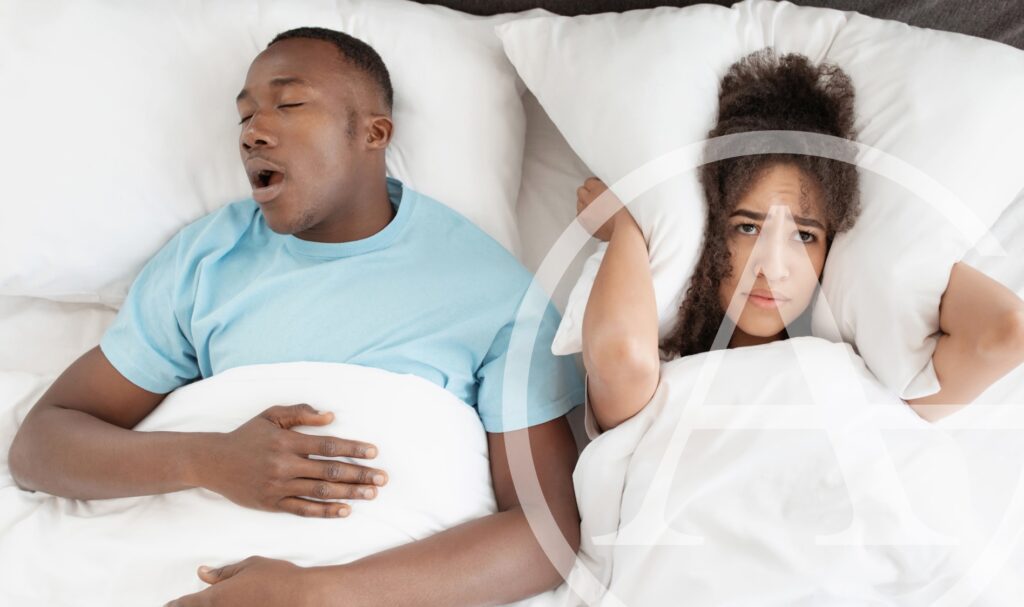
The most immediate and audible symptom of obstructive sleep apnea is often severe, disruptive snoring. While snoring is frequently dismissed as a harmless quirk or a nightly annoyance, in the context of sleep apnea, it is a sign of airway collapse. As the muscles in the throat relax during sleep, tissue vibrates and eventually blocks airflow, causing the individual to stop breathing repeatedly throughout the night. Each gasp or choking sound jolts the sleeper out of deep sleep, but it does something else too: It destroys the partner’s sleep.
Loud snoring and restless nights can lead to frustration and even separate sleeping arrangements. What begins as an occasional migration to the guest bedroom often hardens into a permanent physical divide, robbing couples of the intimacy and comfort that comes from sharing a bed. And sometimes, both partners end up sleep deprived.
Even if the person with sleep apnea is technically in bed for eight hours, their sleep is non-restorative. Meanwhile, their partner is repeatedly awakened by loud gasps, elbowing, or turning, leaving two exhausted individuals navigating the demands of the next day on empty tanks. This chronic nighttime disruption breeds silent resentment. It is difficult to maintain warmth and emotional attunement when one or both people feel physically depleted before the sun even rises.
Daytime fatigue changes how you show up.
Exhaustion is a heavy cloak that alters how you experience the world. When your brain and body are starved of oxygen and quality rest night after night, daytime fatigue sets in as a persistent, unyielding baseline. This profound lack of energy changes how you show up for the people who matter most.
Having low energy can make it harder to engage with family, friends, or your partner. Simple household tasks, active listening, or participating in meaningful conversations suddenly feel like monumental chores requiring more energy than you possess. You may also feel too tired for social plans or quality time. Date nights are canceled, social invitations are declined, and weekend outings are traded for couch-bound exhaustion.
Over time, friends and family may misinterpret this withdrawal as personal rejection or a lack of care, further isolating the individual and straining social networks. Instead of actively participating in your life, you find yourself merely surviving it, moving through obligations like an automaton with nothing left over to invest in your relationships.
Mood Swings and Irritability
Sleep is the brain’s reset button, particularly for emotional regulation. During deep and REM sleep, the brain processes emotional experiences, balances neurotransmitters, and resets the prefrontal cortex, which is the region of the brain that is responsible for impulse control, empathy, and rational thought. When sleep apnea repeatedly interrupts these stages, emotional regulation collapses.
Poor sleep can affect emotional regulation, stripping away your brain’s natural buffer against stress and frustration. Minor inconveniences suddenly feel like major crises. You may also experience increased stress, impatience, and tension in relationships. You might find yourself snapping at your partner over trivial matters, losing your temper with your children, or harboring a constant, low-grade irritability that keeps everyone around you walking on eggshells. This emotional volatility creates a defensive atmosphere in the home. Partners stop sharing things openly out of fear that a tired, cranky response will trigger an unnecessary argument, leading to emotional distance.
Brain Fog and Communication Struggles
Cognitive function is deeply intertwined with sleep health. Chronic sleep deprivation caused by airway blockages degrades memory consolidation, concentration, and processing speed, resulting in what is commonly known as brain fog. Brain fog can cause difficulty focusing and remembering, and staying present in conversations becomes a daily struggle. You might find yourself zoning out while your partner is talking, forgetting important commitments, or failing to grasp complex details during discussions.
Brain fog can also lead to misunderstandings or disconnection. When you cannot be fully present or articulate your thoughts clearly, communication breaks down. Your partner may feel unheard, unimportant, or dismissed, even if your detachment is entirely physiological rather than emotional. Over time, this communication gap weakens the foundational trust and intimacy that keep a partnership strong, replacing deep connection with superficial exchanges.
How can sleep dentistry help restore balance?
The encouraging reality is that these relationship-straining symptoms are entirely treatable. When people think of sleep apnea treatment, they often picture bulky, loud continuous positive airway pressure (CPAP) machines. While effective for many, CPAP intolerance leads countless individuals to abandon treatment altogether, leaving their health and relationships vulnerable. This is where specialized care makes all the difference.
How sleep dentistry can help restore balance involves targeted, comfortable alternatives designed to integrate seamlessly into your life. Oral appliance therapy and neuromuscular approaches can improve airflow and sleep quality by custom-fitting a discreet, mouth guard-like device that gently repositions the lower jaw forward. This keeps the airway open throughout the night, eliminating the physical obstructions that cause snoring and apneas.
Better sleep leads to better mood, energy, and connection. By eliminating nightly micro-awakenings and restoring proper oxygen flow, your brain finally achieves the deep, restorative sleep it requires. The transformation is often profound. With renewed energy, stabilized moods, clear thinking, and quiet nights, couples find themselves returning to the warmth and closeness they thought was lost forever.
Visit Dallas Cosmetic Dental for a consultation.
Sleep apnea doesn’t just impact your nights. It can affect your closest relationships. The good news is that with the right treatment, you can start showing up as your best self again. If you or your partner are experiencing the hidden toll of chronic snoring, exhaustion, and relationship strain, addressing the root cause through advanced sleep dentistry is a powerful step toward healing your health and revitalizing your most cherished connections. Contact Dallas Cosmetic Dental today to schedule your consultation.
