5 Reasons Dental Implants Are Still Possible Years After Tooth Loss
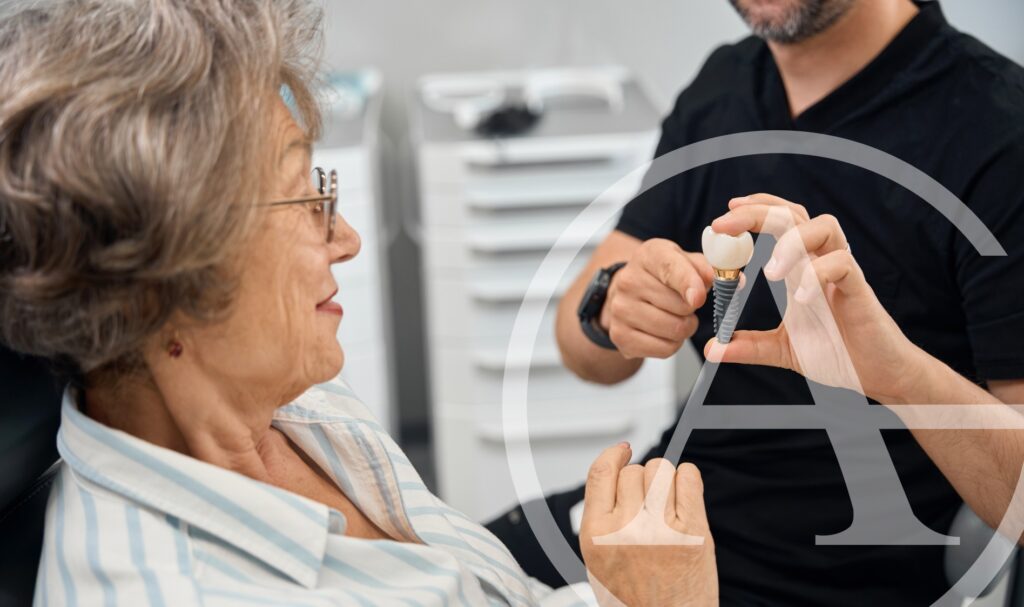
Yes, Getting an Implant Is Still an Option
Many patients assume that dental implant treatment isn’t possible if a tooth has been missing for years. However, while it’s best to get a dental implant as soon as possible after tooth loss, what makes someone a good candidate for a dental implant isn’t how long the tooth has been missing. Instead, it comes down to your specific oral health and anatomy.
If you’ve been considering getting dental implants near Highland Park, Texas, but are concerned that you’ve waited too long, here are five reasons that this treatment may still work for you.
1. Modern Imaging Can Show Exactly What You’re Working With
Planning is one of the most important steps in getting dental implants. Your dentist needs to fully evaluate the bone, surrounding teeth, gums, and anatomy to develop the right treatment plan.
Today, modern technology makes precise and accurate planning much more accessible. Imaging using the latest scanners allows dentists to generate 3D renderings of your teeth, jaw, and surrounding structures.
With this imaging, they can assess the extent of bone loss and other factors. Fully understanding your specific case lets them determine the best route forward. Instead of simply assuming that you aren’t a suitable candidate, they can judge your case based on its individual characteristics.
2. Bone Loss Doesn’t Always Rule Out an Implant
One of the most common dental implant questions is whether bone loss rules out implants entirely. While it is true that dental implants need a strong foundation to function properly, bone loss doesn’t always mean that you aren’t a good candidate.
Years of living with missing teeth can shrink the jawbone, leaving an insufficient foundation. However, the extent of shrinkage can vary widely. Just because you have had missing teeth for a long time doesn’t mean it has progressed to that point.
Even when bone loss has occurred, there are often still options. You can talk to your dentist to see if bone grafting and other preparatory treatments may be appropriate for your case.
3. Your Remaining Teeth May Have Shifted
A missing tooth affects all of its neighbors. One of the biggest challenges in restorative dentistry is that the gap left by a missing tooth allows adjacent teeth to shift. Without any resistance to stop them, they can move into the gap and drift out of alignment, causing a variety of issues.
This means that implant planning must take your entire bite into consideration. If your other teeth have shifted after years of missing teeth, that will probably need to be corrected before implant placement.
For example, you might need orthodontic treatment to adjust the positions and orientation of those teeth. You’ll want to allow sufficient space for the implant to sit properly.
That positioning is also important for opposing teeth. If they’ve shifted, then your dental implants could come into contact with them due to an improper bite and become damaged.
4. There Are Different Implant Solutions for Different Situations
Dental implants don’t just come as a one-size-fits-all solution. There are actually many approaches available, depending on the number of missing teeth and other factors.
People often get a single dental implant to replace an individual missing tooth. In these cases, your dentist places an implant base and then attaches a crown. For a few missing teeth in different areas of the mouth, this process can be repeated with multiple implants.
However, people living with all or most of their teeth missing can also benefit from full arch replacement. All-on-4 dental implants use a system where four dental implants are spaced to support a full row of replacement teeth. This provides stability, function, and a natural appearance while minimizing surgical requirements.
5. Your Current Health Matters More Than the Calendar
Age is certainly a factor in oral health, but it’s far from the only one. Individual gum health and bone availability vary widely among patients in any age group. The only way to know for sure whether dental implants are an option is to talk to your dentist.
Other factors, such as smoking, medical history, and medications, can also impact your candidacy for dental implants. Implant placement is a surgical procedure, so it may not be right for everyone, but this isn’t tied to age.
If you’ve maintained good oral hygiene and don’t have prominent contraindicating medical conditions, dental implants can be an option even after years of living with missing teeth.
Don’t Assume You’ve Waited Too Long
Even if you lost teeth decades ago, it’s important not to assume that you’ve waited too long for a solution. Restoring your smile is still possible, and it starts with an evaluation from your dentist.
Looking for the best implant dentist in Highland Park, Texas, to explore your options? Schedule an appointment at Dallas Cosmetic Dental today, and we’ll be happy to walk you through dental implants and other treatments to restore your smile.